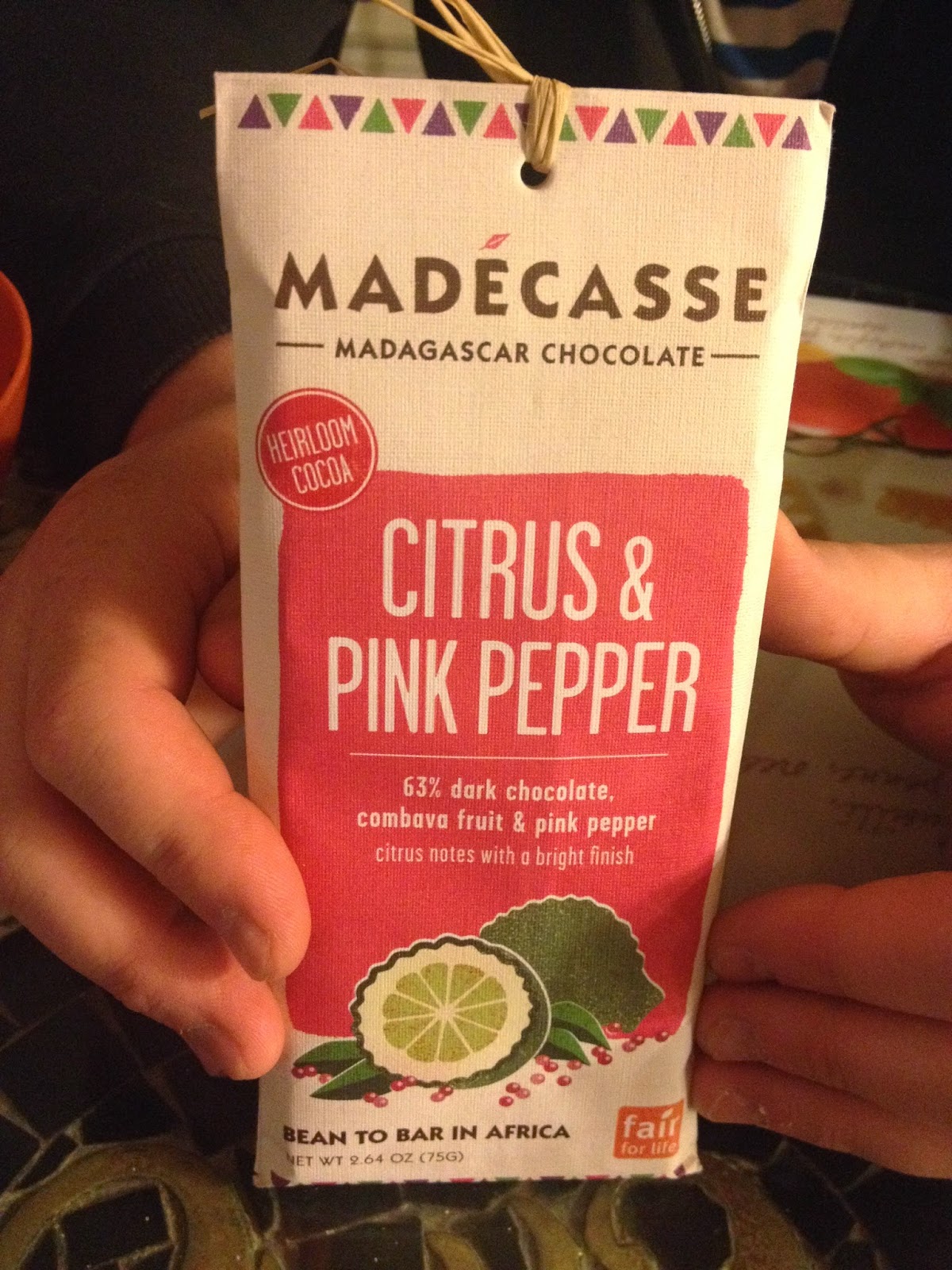
Madecasse Citrus and Pink Pepper Bar
Madecasse Chocolate Bar Review: Bean-to-Bar Chocolate Made in Madagascar
We got this Madecasse bar at Whole Foods. What makes Madecasse unique is that they not only harvest the cacao beans in Madagascar; they actually make the chocolate bars there, package them, the whole bit. What happens out of their Brooklyn factory is the distribution, not any of the chocolate-making.
According to this article I read about Madecasse:
Seventy percent of the world's cocoa beans come from Africa, but less than one percent of the world's chocolate is produced there. Most African cocoa winds up in chocolate factories in Belgium, Switzerland, and France.
There are people who farm cacao plantations who have never actually tasted chocolate, or, even if they have, they may not have tasted chocolate created from the beans that they're harvesting. This is why you can go to a country like Ecuador, which grows great cacao, and have trouble finding a decent bar of chocolate to eat. This is why Madecasse is special.
So, that's the sociopolitical background. The question now is: how's the chocolate?
Answer: it's interesting. The pepper is not too spicy, and it's not textural, either, but you can definitely taste it. It works well. The "combava fruit" advertised on the package is just a lime. This lends the bar an almost juicy taste, like biting into one of those pieces of gum that has a fruity liquid interior.
Overall, it was good, and unlike other bars. But it was not very chocolatey. I mean, it clearly was chocolate, but the flavor notes were not "chocolatey."
BOTTOM LINE: A tasty, unique bar, but without a strong chocolate flavor.
Why "Made in Madagascar" Matters
Most people never think about where chocolate is actually made. The usual pattern is that cacao grows in tropical countries, the beans are shipped as a raw commodity, and the real manufacturing happens thousands of miles away. The farmers supply the raw material, while the factories in Europe or North America capture most of the profit and put their names on the wrapper.
Madecasse tries to change that pattern. By roasting, grinding, molding, and wrapping the chocolate in Madagascar itself, the company keeps more of the work, and more of the income, in the country where the cacao grows. That also means local workers learn every step of chocolate making, not just harvesting. For a shopper standing in the candy aisle, this is a simple way to support a different model: the bar in your hand was finished at the source, not just imported.
A Quick Look at Madagascar Cacao
Madagascar is an island off the southeast coast of Africa, known for vanilla, spices, and cacao. Much of its cacao is grown in the northwest of the island. Chocolate makers often describe Madagascar beans as bright and fruity, with citrus and red-berry notes rather than the heavy, roasted flavor many people expect from a chocolate bar. If you have only eaten mass-market milk chocolate, this can be surprising.
That may explain the review above. When a bar is built on fruity, acidic beans and then combined with lime and pepper, the result tastes lively and fresh, but less like the classic "chocolatey" flavor of cocoa, roasted nuts, and caramel.
Understanding the Flavors
Pepper. Pepper in chocolate is a subtle idea. Done badly, it makes the bar hot or gritty. Here, the pepper is noticeable but gentle. It adds a warm, aromatic edge that you notice after the chocolate melts, and it does not add a rough texture.
Combava. Combava is a citrus fruit grown in Madagascar and other parts of the Indian Ocean. It is closely related to the makrut lime, and its zest is very fragrant. On the package it sounds exotic, but as noted above, the flavor reads as a lime. The citrus oils brighten the bar and give it that juicy, almost bubbly quality.
The chocolate itself. Because the fruit and pepper are so prominent, the cocoa flavor sits in the background. If you love deep, dark, roasted chocolate, this bar may feel too light on cocoa. If you enjoy fruit-forward flavors, it may be the highlight.
How to Taste Chocolate Like a Pro
If you want to get more out of a bar like this, try tasting it slowly:
- Look at it. Good chocolate has an even, glossy surface.
- Snap it. A clean, sharp break usually means the chocolate was tempered well.
- Smell it. Rub a piece with your thumb to warm it, then smell the aroma.
- Let it melt. Place a small piece on your tongue and let it dissolve instead of chewing. The flavors appear in stages.
- Notice the finish. Pay attention to what lingers after you swallow.
Tasting this way makes it much easier to pick out the lime and the pepper, and to decide how you feel about the balance.
What to Pair It With
This kind of bar works well with drinks that echo its bright flavors:
- Black or green tea, which complements the citrus without overpowering it
- Sparkling water, which cleans the palate between pieces
- Light coffee, especially fruity, lightly roasted varieties
- Fresh fruit, such as strawberries or mango
- Mild cheese, for a sweet-and-savory snack plate
Who Will Enjoy This Bar
This bar is a good fit if:
- You like trying unusual flavor combinations
- You prefer fruity chocolate over intense, bitter dark chocolate
- You want to buy chocolate that supports production in the country of origin
- You are looking for an interesting gift for a chocolate lover
It may not suit you if you want a classic, rich chocolate experience with strong cocoa notes.
Storing Chocolate Properly
Keep chocolate in a cool, dry place, away from sunlight and strong smells. Avoid the refrigerator unless your home is very hot, because moisture can cause a whitish film called bloom on the surface. Bloom is harmless, but it changes the texture. Wrap opened bars tightly so they do not absorb the aroma of other foods.
Frequently Asked Questions
What is bean-to-bar chocolate?
It means the same company controls the process from processing the cacao beans to making the finished bar, instead of buying ready-made chocolate and remelting it.
Is combava the same as lime?
Not exactly, but it is a citrus fruit with a strong lime-like aroma and flavor, which is why the bar tastes like lime.
Why doesn't the bar taste very chocolatey?
The strong fruit and pepper flavors, along with naturally fruity Madagascar cacao, can take attention away from the traditional cocoa notes.
Where can I buy it?
We found ours at Whole Foods, and specialty grocers and online shops often carry it as well.
Final Thoughts
The Madecasse bar is a good reminder that chocolate has a story beyond its flavor. Knowing where the cacao is grown, who processes it, and where the profit goes can change the way you look at a simple candy bar. As for the taste, this bar is not the most chocolatey one you will ever try, but it is refreshing, memorable, and different from what most of the aisle offers. If you enjoy adventurous flavors and like your chocolate with a purpose, it is well worth a try.


Comments
Post a Comment